

Solving a Painful Problem Is a Core Pillar of Purpose
From Al-Khwarizmi to the Wright Brothers - finding the right problem to solve is the key

How would you feel if you created something that genuinely changed the world?
How would you even get started on such an exciting, life-changing project?
Contrary to popular belief, most people who develop something amazing it often happens as a byproduct or whilst they're doing something else.
Great inventions, inspirations and innovations very rarely take place because someone sat down in the perfect conditions with the perfect team and perfect funding to do it.
The Wright Brothers are an example of this. Their competitor, heavily promoted, hugely funded, highly educated Samuel Langley and his team wanted to create the first flying machine - because they wanted fame and their name in history.
The Wright Brothers, as low key as they were on the other hand genuinely wanted to solve the problem of manned flight.
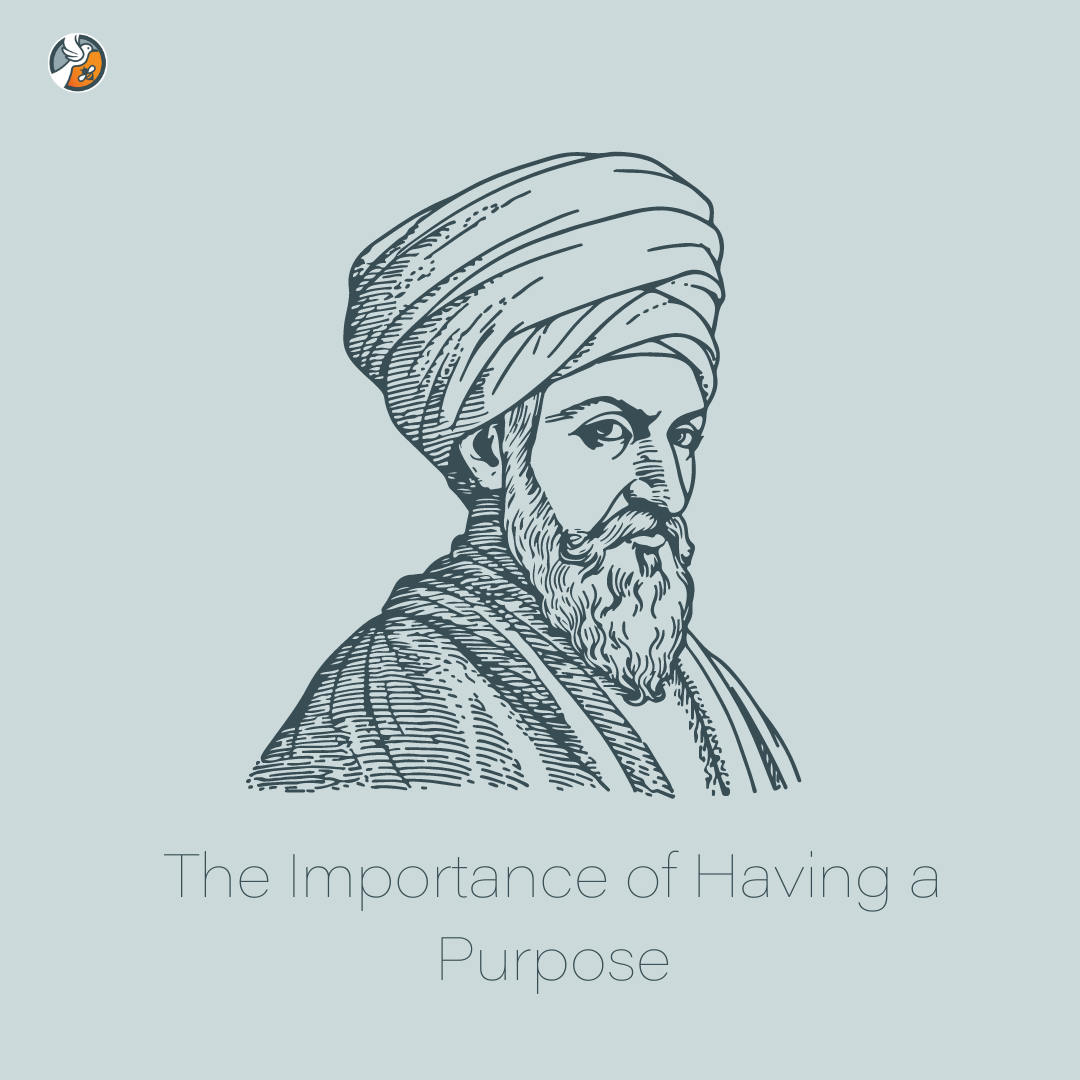
When al-Khawarizmi wrote his Kitab al-Jabr, the beginnings of modern algebra, he was not laying the foundations of speculative mathematics randomly but largely working out the laws of inheritance, a subject so vast that has been called a 'half of knowledge'. That was the problem he was solving.
Knowing WHY you're doing something is extremely important as it activates the brain and ensures you are motivated and driven enough to navigate through the inevitable challenges and get to the end destination.
Long term, not only did Al-Khawarizmi achieve amazing things and discover algebra and algorithims; through his understanding of inheritance laws, it also solved a very local problem - which led to wealth being spread more evenly in the community.
For those of you currently on the path - keep moving forward.
You don't know how it will manifest. It may be your current job that you hate, might introduce you to the right person or build the right skill that is needed later down the line.
A lot of this can be understood through the lens of PAST, PRESENT and FUTURE.
The most important thing for your mission, is to understand what problem are you the most passionate about solving? What do you really, really care about more than anything else? This is PRESENT.
Often (but not always) this will be linked to your past in some way - a bad / memorable experience, something in childhood, something which may have affected you but stayed with you. Or even interests and enjoyable activities. This is PAST.
And what would the world look like, if you were to achieve your mission? This is FUTURE. This is the vision.
Going back to the Wright Brothers... what in their past sparked their interest to solve such a huge, unprecedented problem?
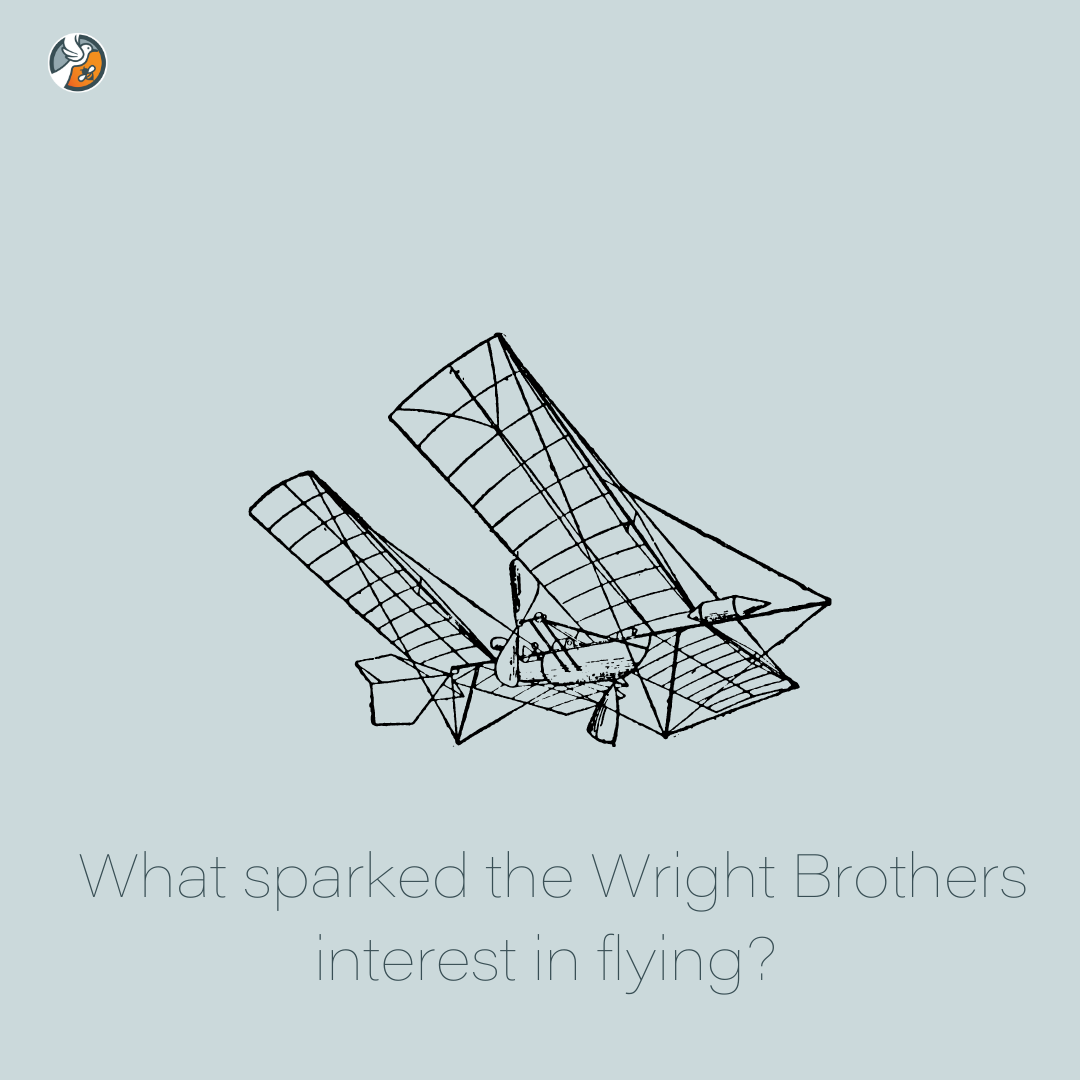
There were several factors in their success, from their early years, towards taking the decision to fully focus on solving the problem in 1896.
PAST
In 1878, the brothers’ father, Milton Wright, brought home a rubber band-powered toy helicopter. Designed by French aeronautical experimenter Alphonse Pénaud, this toy did not simply fall to the ground as expected. Rather it "flew across the room till it struck the ceiling, where it fluttered awhile, and finally sank to the floor." Though the fragile toy soon broke, Wilbur and Orville never forgot it. They even attempted to build their own toy helicopters. In later years, Orville accredited this childhood toy as being the object that sparked their interest in flight.
Later, one of the brothers, Wilbur had a hockey accident which stopped him from going to college. He instead stayed home for three years to recover and read his father’s entire library and became extremely curious and intellectually formidable.
The other brother, Orville started work at a printing shop and later opened his own printing manufacturing business, which Wilbur joined soon after. They then opened a successful bicycle repair business in 1892.
Their work with printing presses and bicycles honed their mechanical skills and provided funds for their aviation experiments, and also gave them experience with lightweight, precision machinery - ideal preparation for building aircraft.
PRESENT
In 1896, two key events motivated them to pursue aviation seriously:
The first was the death of German glider pioneer Otto Lilienthal in a flying accident.
The second event was Samuel Langley's successful unmanned powered model flights that year which acted as the proof of concept that flight was actually possible and gave them the belief to put their own funds and time towards this cause.
FUTURE
These two events transformed their passive curiosity into an active pursuit of solving the problem of human flight.
Wilbur Wright correctly deduced that Lilienthal had died due to inadequate control of his glider. This realisation led the Wrights to prioritise the issue of aircraft control in their research, which became a key factor in their eventual success and they used Lilienthal's aerodynamic data as a starting point for their own investigations. They
The Wrights identified aircraft control as the key unsolved problem in aviation that they were determined to solve.
This was a complex technical problem that appealed to their analytical minds.
It wasn’t plain sailing. It was extremely difficult and pushed them to their limits.
In 1900, Wilbur Wright wrote a letter to Octave Chanute, an engineer and worldwide authority on flight at the time:
For some years I have been afflicted with the belief that flight is possible to man. My disease has increased in severity and I feel that it will soon cost me an increased amount of money if not my life. I have been trying to arrange my affairs in such a way that I can devote my entire time for a few months to experiment in this field.
In 1903 however, they had beaten Langley and achieved their goal. The world is a much better place for it.
And the rest, as they say, is history.
Focus on solving a specific problem for a specific group of people in a way that pushes you to your limits - but you're willing to go through the pain because it's something you're super passionate about.
That's pretty much the crux of it all.
I talk about the Wright Brothers in this free training I’ve put together for those pursuing their purpose. You can check that out here.
If you’re interested in discovering your purpose - or at least finding out how aligned your life currently is to your purpose check out the free quiz here