

How Does a Tiny Country Wield Huge Global Influence? Unpacking the 22 Secret Strategies of Power

If like me, you've ever wondered how it is possible that such a small country like you know who can wield such massive global influence, the book "How They Rule The World - The 22 Secret Strategies of Global Power" by Pedro Baños is your go-to guide - and is definitely worth a read.
Pedro Baños is a colonel in the Spanish Army and was formerly the Chief of Counter-Intelligence and Security for the European Army Corps. He is one of Europe’s top specialists in geopolitics, terrorism and intelligence.
Understanding these strategies can equip us to be more informed and strategic in our own lives and communities.
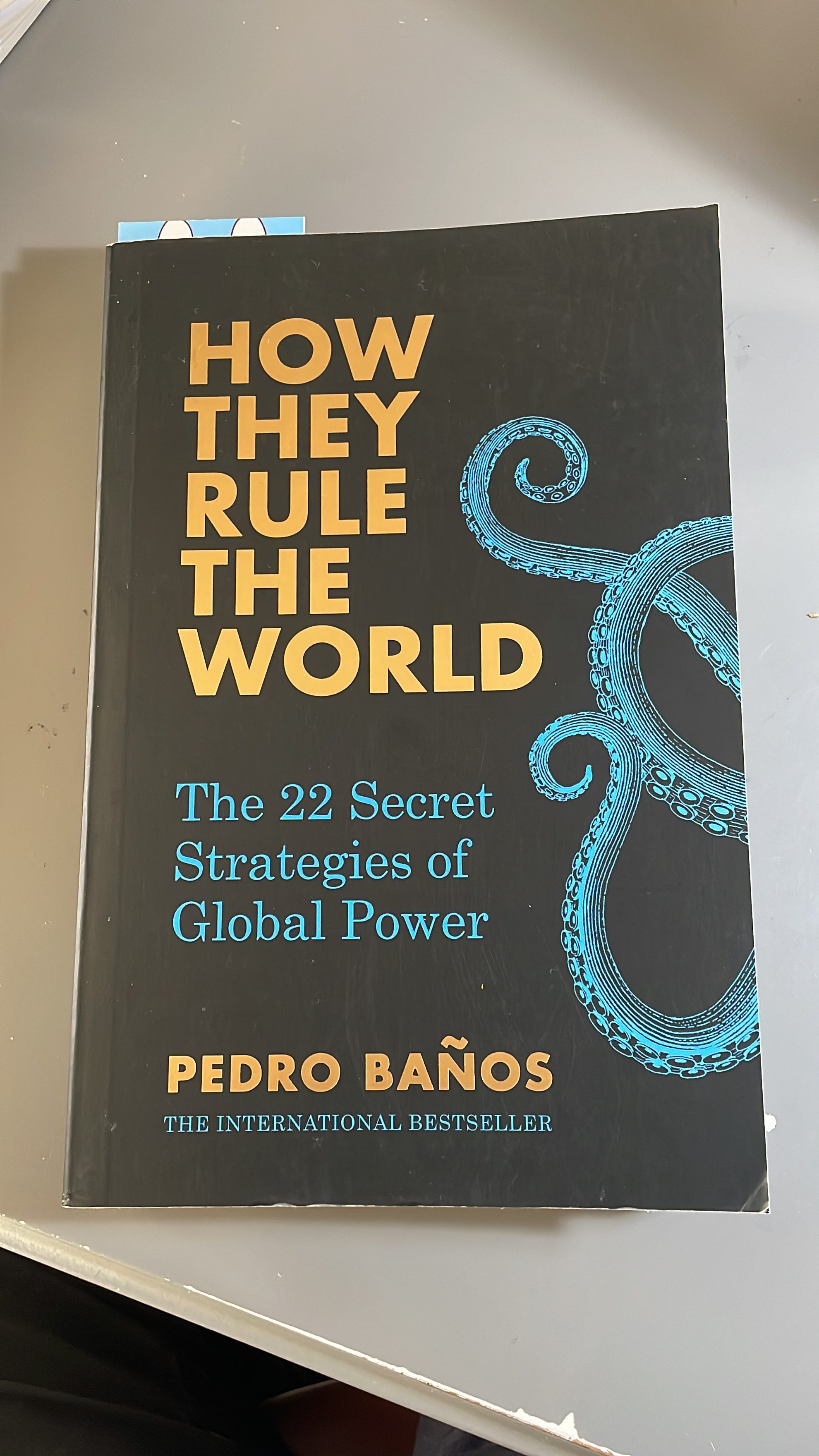
Here's a quick summary from the book about these 22 'secret' strategies.
How many of them do you recognise?
1. Deterrence: This is about showing strength or capability as a warning to others not to cross certain lines. The best form of defence is the 'threat' of attack.
The strategy of deterrence works like a silent but potent warning. It's not just about military might; economic and political clout also come into play. Think of it as having a big stick but hoping you never have to use it.
2. Encirclement: This strategy involves surrounding an enemy or competitor, cutting off their options and resources, effectively cornering them. Encirclement isn't just geographical; it's also psychological. By isolating competitors or potential threats, you can force them into situations where they have fewer options and are easier to control.
A great quote:
"If a ruler doesn't understand chess, how can he rule a kingdom?" King Khosrow
3. Kicking Away the Ladder: This means removing support or resources from someone once they have served their purpose or once you've reached your goal, leaving them unable to follow you. This strategy operates on the principle of “pulling up the ladder” after you've climbed it, leaving others stranded. The debate over who can or cannot possess nuclear weapons is a glaring example.
4. Beggar Thy Neighbour: This involves enriching yourself at the expense of those around you. It's about gaining advantages that harm your neighbours or competitors. The goal here is to enrich yourself while subtly ensuring that your neighbours remain weak. This is a delicate balancing act however, as destabilising your neighbours too much could backfire.
The US for example want Mexico to be stable for the most part, but not evolve enough to be a true regional rival.
5. Feign and Conceal: This strategy involves hiding your true intentions or capabilities. Becoming a master of deception. It's like a magician's trick—divert attention to one hand while the other does the work. You show something on the surface, but what you're really planning is hidden.
6. The Breaking Point: This is about pushing someone or a group to their limit until they break, making them easier to control or defeat. All states have a 'centre of gravity' - a focal point that can make everything come crashing down. What is your rival's achilles heel?
7. Divide and Rule: This isn't just a tactic; it's an age-old strategy. From colonial times to present-day politics, creating divisions among groups to weaken them collectively, makes it easier to control or conquer them.
One of the oldest and most successful strategies. Spreading disharmony to break up existing power structures and prevent new ones forming through unity.
8. Puppetmastery: This involves controlling others from behind the scenes, making them act according to your wishes without them realising it. Also known as indirect rule, one method is through the worldwide promotion of democracy. Another is through art, culture and entertainment.
9. Lawfare: Using legal frameworks and systems to achieve military or political objectives. It's about turning the law into a weapon. The Golan Heights were seized in the 1967 Six-Day War through a mix of military and legal manoeuvring.
10. Don't Do for Yourself What Others Can Do For You: This is about outsourcing problems to others, conserving your own resources. Strategic delegation. Why waste your resources when you can exploit someone else's? False flag operations are an extreme but effective way of doing this. After all, Stalin said the easiest way to get control of a population is through terror.
11. Creating an Enemy: Building up an external threat to unite people under your leadership, diverting attention from other issues. This is all about inventing a convenient threat (that aligns with your strategic objectives.) This is how Hussein and Gaddafi became enemies overnight.
12. Lie Big and Some of it will Stick: The idea here is that if you tell a big enough lie often enough, people will start to believe it.
This is used ALL the time.
Vladimir Lenin put it succinctly: "A lie told often enough becomes the truth."
This strategy thrives in the age of social media, where misinformation can spread like wildfire.
13. Weapons of Mass Communication: Using media to control the narrative and shape public opinion to your advantage. Control the narrative, control the game.
Media is a potent tool for shaping public opinion and, by extension, influencing outcomes. Propaganda and disinformation lives here.
14. The Uses and Abuses of the Poor: Exploiting disadvantaged groups to serve your ends, either as a labour force or as a political tool.
Think about how many times governments act 'to liberate' the oppressed women of x or provide education to the children of y etc.
15. Sowing Seeds of Discord: Creating internal strife or disagreement among other parties to weaken them, making it easier for you to exert influence. "The enemy with internal problems is ripe to be conquered." - Machiavelli
The Arab revolts in the Ottoman Empire a la Lawrence of Arabia is a key example here.
16. Religious Fervour: Leveraging religious beliefs to galvanise support and drive people toward a particular cause or action. Netanyahu is doing this right now with his ‘Amalek’ rhetoric.
17. The Escape Route: Always having a backup plan or exit strategy to minimise losses if things don't go as planned. This is recognising that the desperate enemy is also the most dangerous.
18. The Mr. Nice Guy Strategy: Who suspects the nice guy? This strategy uses kindness as a cover, acting friendly and helpful to disarm others and make them lower their guard, only to exploit them later.
This is how the West tend to rule, framing everything as being for the common good.
19. The Creation of Need: Making people or groups dependent on you by creating a need only you can satisfy. The US did this constantly, as the largest producer of arms, to promote warfare in other regions, so they could supply their products.
20. The Madman: Acting unpredictably to keep others off balance, making it difficult for them to strategise against you. It is said Putin uses this very effectively.
21. The Tower of Champagne Glasses: Creating a hierarchy where everyone relies on the layer below them, ensuring loyalty and support from the bottom up.
Essentially, as long as resources are shared with lower levels, there will be no protest or revolution. Bread and circuses.
22. The Mule and the Saddlebags: Weighing down soldiers with promises of a brighter future or threat of being a traitor. Once the saddlebags are on the ‘mule’ - they ain’t ever coming off. This is how they rally people for war.
"If more soldiers thought, there wouldn't be a single one left in their ranks." Frederick I of Prussia
This is just scratching the surface of these 22 secret strategies of global power.
You can see clearly how these have been used to coerce and control with impunity.
You are seeing the beneficiaries of these strategies act when they are in posiitons of power and control. Stay on guard. Don’t trust anything, blindly.
Understanding these 22 strategies allows us to recognise them in action and guard against this manipulation. It also equips us to think more strategically in our own endeavours.
I hope this knowledge can help us to navigate the complexities of our world better and to encourage more critical thinking in our own communities, insha’allah.